
What’s Burns Night?
January 25th is Burns Night and the date the nation pays homage to its beloved national poet, Robert Burns. Burns Night takes place on the anniversary of his birthday. It is a jolly occasion, with Burns Night Suppers taking place across the country. There are a host of other events commemorating the life and works of Robert Burns taking place around this time. We explain what is Burns Night, why is Burns Night celebrated and where to celebrate Burns Night in Scotland in 2025.

Who was Robert Burns?
Robert (Rabbie) Burns, fondly known as the “Ploughman Poet” or the “Bard of Ayrshire,” is probably Scotland’s most famous writer. During his relatively short life, he wrote over 550 songs and poems, becoming regarded as Scotland’s national poet. Burns is known for works such as “Auld Lang Syne”, “Tam o’Shanter” and “To a Mouse”.

Burns’s works, written in both English and Scots dialect, reflect themes of love, nature, and social justice. His work reflects his deep connection to Scottish culture, nature, and the common man. Burns’s ability to capture the nature of the human experience in poetic form have earned him enduring popularity.
His status as a Scottish icon also reflects the importance of his work against a backdrop of social changes taking place in Scotland at the time of his writing. Since the Union with England in 1603, Scottish Gaelic and Scottish dialects had slipped into decline. English was seen as a more genteel and cultured language. By writing in Scots alongside English, Burns celebrated the Scottish language and culture and secured for Scotland its place in the worldwide literary canon.
Life & Work of Robert Burns
Early Years and Hardship
Robert “Rabbie” Burns was born on January 25, 1759, in the village of Alloway, Ayrshire. The son of a struggling gardener turned farmer, William Burns, Robert Burns experienced the harsh realities of rural life during his childhood. Whilst he worked hard on the family farm from an early age, his parents made sure he received some kind of education. He learnt the three Rs, French and Scripture. He also learnt a vast repertoire of traditional songs and stories from his mother, Agnes.
The young Rabbie was an avid reader and his insatiable thirst for knowledge led him to immerse himself in the works of Shakespeare, Milton, and Dryden. He was also influenced by other prominent Scottish thinkers of the time such as Adam Smith. Burns came to poetry at an early age and would compose verses as he worked alongside his family in the fields.

After his father’s death in 1784, a penniless man despite his years of backbreaking work, Burns’s work developed a more satirical edge. Throughout his career he was critical of perceived injustice and inhumanity. His work often reflected themes of freedom and social justice alongside a love of Scotland, its culture and spirit.
Burns’s poetry was not confined to the political landscape. It also delved into the complexities of human relationships. His love songs, such as “Ae Fond Kiss” and “My Love is Like a Red, Red Rose,” are poignant expressions of love’s joys and sorrows. In “Ae Fond Kiss,” Burns encapsulates the pain of parting with a loved one.
Kilmarnock Edition and Literary Stardom
After his father’s death Burns continued to work the family farm alongside his brother but with little success. He also had a rather tumultuous personal life, something that continued throughout his short life. In an effort to raise money to move to Jamaica after making a local girl pregnant, he published his first volume of poetry in July 1786 in Kilmarnock. This was a turning point in his literary career. The volume, “Poems Chiefly in the Scottish Dialect” which included masterpieces like “To a Mouse” and “The Cotter’s Saturday Night,” was an instant literary success. He moved to Edinburgh and with his good looks, wit and charm, became a darling of literary society there. In 1787 he published an Edinburgh edition of the collection.

Scottish Traditional Songs
Whilst in Edinburgh he met another enthusiast for traditional Scottish songs and folk music, James Johnson. Together they embarked on a project to preserve these traditional songs as a collection. The collection, known as The Scots Musical Museum, preserved 600 songs and pieces of music in 6 volumes published between 1787 and 1803. In addition to collecting old songs, Burns also wrote new words to old songs.The collection became internationally popular with some of the songs being arranged by famous classical composers such as Beethoven.
With the exception of his verse “Tam O’Shanter”, music and songs became his primary focus for the rest of his career. He also collaborated with George Thomson to publish classical arrangements of Scottish songs, “A Select Collection of Original Scottish Airs”.
Later years of Robert Burns
Robert Burns spent some years touring Scotland to capture, rescue and record its culture and traditional songs. He travelled first to the Borders and then to central Scotland and the Highlands. Eventually he settled with his family at a farm in Ellisland, Dumfriesshire in 1788. However, the farm did not prosper and lack of funds meant that, despite his radical beliefs, he was eventually forced to take employment as an Excise officer, moving to Dumfries with his family in 1791.
However, ill health took its toll on Burns and he died only 5 years later in 1796 at the age of 37. He was buried on 25th July 1796 in St Michael’s Churchyard in Dumfries. Initially, he had just a simple stone to mark his grave, but his body was later moved in 1817, with that of his wife, to a mausoleum in a more prominent position. This followed an international fundraising campaign whose donors included Sir Walter Scott.

Why is Burns Night Celebrated?
Burns Night is a night to celebrate and honour Robert Burns. It signifies the unique place in Scottish culture and history he occupies. His literary works not only showcased the poetry of the Scots language internationally but also captured the essence of Scotland and the Scottish identity.
Burns’s impact is not confined to literature. His role in collecting and preserving traditional Scottish folk songs was an invaluable contribution to the preservation of the nation’s rich musical heritage.
The annual celebration of Burns Night reflects both his enduring legacy in Scotland’s cultural heritage and also the affection and popularity with which he is regarded. Burns’s verses often touch on the struggles and triumphs of common folk, meaning people from all works of life could relate to his work.

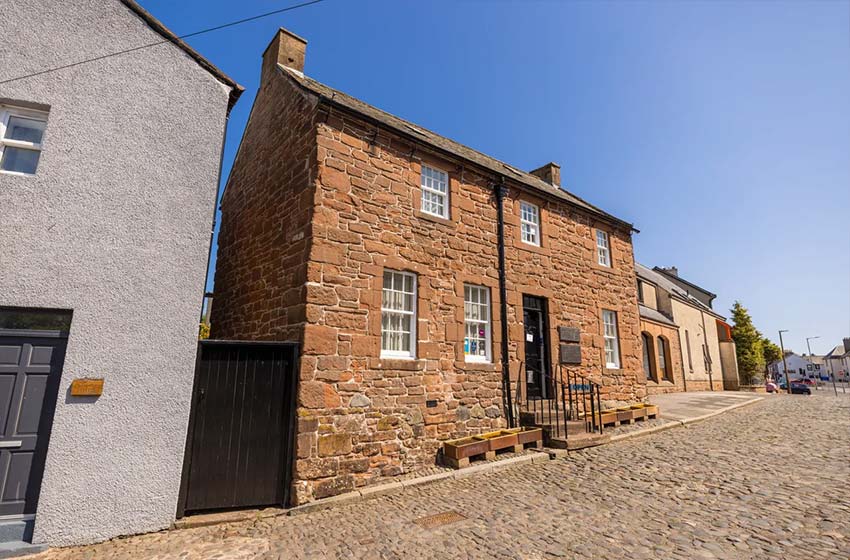
The first Burns Supper took place at Burns Cottage in Alloway in July 1801, the fifth anniversary of his death. A group of his friends decided to mark the 5th anniversary of his death by telling stories about him, quoting from his work and raising a toast. On the menu was sheep’s head and haggis.
They enjoyed the occasion so much they decided to repeat the occasion the next year, this time on his birthday instead. However, the second year they got the date wrong and the Supper took place on the 29th. It wasn’t until 1803 that the first Burns Supper took place on January 25th.
The Greenock Ayrshire Society began to organise an annual Burns Supper. In 1815, Sir Walter Scott organised a grand Burns Supper in Edinburgh. Eventually the tradition spread throughout Scotland and across the world.
Burns Night Suppers & Traditions
What goes on at a traditional Burns Night celebration?
Burns Night is a lively and convivial celebration marked by traditional customs and rituals. The centrepiece of the festivities is the Burns Supper, a feast of traditional Scottish fare accompanied by poetry recitations, song, and the ceremonial addressing of the haggis.
Piping in of the Guests and welcome speech
A formal Burns Supper will feature a bagpipe accompaniment to the arrival of the guests. Following this the guests will be welcomed by their host
The Selkirk Grace
Before the meal, attendees say the Selkirk Grace, a short prayer attributed to Burns, expressing gratitude for the meal.
“Some hae meat an canna eat,
And some wad eat that want it;
But we hae meat, and we can eat,
And sae let the Lord be thankit.”
Burns Night Menu
The meal typically begins with a soup course, followed by the main event – haggis, neeps and tatties. Haggis is a traditional Scottish dish made of minced sheep’s offal, suet, and oats, seasoned and encased in the sheep’s stomach. It is served with neeps (turnips) and tatties (potatoes).
Piping in the Haggis
The haggis will make a dramatic entrance of the haggis, Bagpipes play as the haggis is paraded into the room by the cook. The Master of Ceremonies, or a chosen speaker, recites Burns’s famous poem, “Address to a Haggis.”
“Fair fa’ your honest, sonsie face,
Great chieftain o the puddin’-race!”

The Immortal Memory
One part of the proceedings is the Immortal Memory. A poignant and reflective moment, the Immortal Memory is a tribute to Burns’s life and legacy. A speaker will share anecdotes, readings, and insights into the poet’s work.
Toast to the Lassies and Response
The evening is punctuated with toasts of whisky, including the amusing “Toast to the Lassies” and its witty counterpart, the “Response,” fostering good-natured banter between genders.
Poetry Readings and Songs
During the Burns Night Supper there will be other recitations of the poet’s verses and renditions of his songs, all contributing to the convivial atmosphere.
Auld Lang Syne
The evening concludes with a heartfelt rendition of “Auld Lang Syne,” a song that symbolises friendship and the passage of time. Participants join hands, creating a circle of unity as they sing this iconic anthem.

Burns Night 2027
Numerous celebrations are set to take place across Scotland for Burns Night 2027. There will be traditional Burns Night suppers, cultural and educational events and plenty of music and dancing. You can find a list of Burns Nights events in our page on Things to do in Scotland in January.

Big Sky Campers Campervans for Hire
Scotland
Big Sky campervans are all fully insulated and have heaters so you can stay toasty even in the cooler months. Our fully inclusive campervan rental price includes absolutely everything that you will need for campervanning in Scotland. The only additional items we charge for is the hire of a portable toilet and additional drivers. Everything is included in the price, including extra sets of bedding if requested.
Got a question? Give us a call.
+44 (0)7768 973804

Or send us a mail
Reviews

Rimantas Mockus
1 month ago
We couldn’t be happier with the service provided by Big Sky Campers and the campervan we rented!
From the very beginning, we were impressed by the excellent communication and the genuine warmth and kindness of the owners. The campervan was spotless, well-equipped, and perfectly prepared for our trip. Before setting off, we were given clear and detailed instructions on how everything worked, which made us feel confident and ready for the adventure ahead.
Exploring Scotland in a campervan turned out to be one of the best decisions we could have made. It was an unforgettable experience, and we’re incredibly grateful to the Big Sky Campers team for helping make it so special.
Thank you so much for everything! We would absolutely love to come back and rent from you again. We can wholeheartedly recommend Big Sky Campers to anyone planning a campervan adventure in Scotland!

Corina Hellstern
2 months ago
Everything was perfect. The camper was in excellent condition and clean. Communication was always quick and friendly. We also really appreciated the pick-up from the nearest train station, which is easily accessible from Edinburgh. We highly recommend Big Sky Camper.

Philippa Hansson
2 months ago
We had an amazing experience with Big Sky Campers! Great camper, exellent service and very helpful staff. Everything was absolutely perfect. Highly recommend!!

Dylan Alstr
2 months ago
Friendly, accommodating, and very helpful staff. We had the Brodie van, which was very easy to drive, even for someone who had never driven a van before, especially in the UK! The solar panels were a real bonus, allowing us to be completely self-sufficient without having to go camping for a week. Thanks again, and see you soon!

Sophia Maggiolo
2 months ago
Our camper and the trip we had was the highlight of our entire trip! The Big Sky team explained the van and it's facilities very well, we had no issues using the van and everything it came with. They were prompt with communication and picked us up and dropped us off at the local train station. We left an item in the van and they were willing to meet us and give it back, which was very kind. We would highly recommend!

BW
2 months ago
Amazing experience across the board - brand new campervans that are extremely clean, modern, and drive nicely! Everything you need is also included which makes the experience that much nicer. Using the provided cookware to make meals on the stove in the campervan was the highlight of our trip.
George provided a seamless pickup/drop off process from Inverkeithing, and gave a complete and thorough orientation of our van, Corry, before we went off. 10/10 experience, would recommend to anybody looking to rent a campervan from Edinburgh!

Elena Catalina
3 months ago
The guys here were amazing, and George was especially helpful throughout the whole experience. Everything was straightforward, and the van worked really well. The introductory briefing was very useful, and whenever we needed anything during the trip, we could easily message George and get help.
We really enjoyed our first campervan trip! The van was very easy to use and drive, even on the other side of the road, which made the whole experience much easier.
Just a couple of small suggestions: the USB plugs didn’t work very well (one didn’t work at all), although fortunately we managed to charge our phone. It would also be great to have a few more hooks inside the van to hang clothes, jackets, towels, etc.
Overall, a fantastic first campervan experience, with great support from the team.
Highly recommended!

Lisa Hauser
3 months ago
We had the best time with Morven! Super reliable, well-powered, top-notch equipment, and very clean! The staff were very friendly; I would book again anytime!! Thank you, Big Sky Campers, for this wonderful holiday in the Highlands.

Rafael Gonzalez
3 months ago
An incredible experience. Four days in the Highlands with the campervan in perfect condition. Excellent service. Very good communication. We thoroughly enjoyed the adventure thanks to the support and information provided by Big Sky Campers. If we have the chance, we will definitely do it again. Highly recommended.

Jake Bezuidenhout
2 years ago
Excellent service and interaction from Rob and team. Painless pick up and drop off. The instructions on the vehicle were clear and easy to understand. Will definitely be using them again.

hewson maxwell
2 years ago
Great campervans and lovely people who really want you to enjoy the experience. Highly recommend.

Marianne Laliberté
2 years ago
My boyfriend and I hired Flora for 8 nights back in october. We promised ourselves to leave a review because our experience was wonderful. The staff was very helpful and very kind. Special mention to Rob who really took time to give us tips & tricks for travelling around Scotland! We had a great time with Flora and I think Big Sky Campers is a trustworthy campervan hire company: the service is good, the price are affordable, the campers are beautiful and well-equiped. Thank you for the wonderful experience! We had a great time.

Thierry Hubert
2 years ago
We rented Rowan for 4 days at the beginning of October. Our first experience in a van! Our rental with big sky campers was perfect. The welcome, the Vanlife course, the van like new, the sleeping equipment and finally the kindness and sense of service of our rental company from our check in to our check out. And Scotland in a van is freedom in magnificent landscapes and campsites reserved for vans and motorhomes. Experience it after Edinburgh and do it with Big Sky Camper.

Patric Bartlett
2 years ago
Excellent company, friendly, helpful and professional. The vans are modern, well fitted and have everything you need for a road trip. Will certainly use again and you definitely should too!

Martin K
2 years ago
We rented the Bonnie camper for three weeks in August. Everything went really well, the vehicle was in very good condition and we had no problems at all. The personal contact and service was also very friendly and helpful. Any time again.

Rob Mullings
2 years ago
We traveled from London and picked up our camper Freya for a trip around Scotland. From start to finish the whole experience with Big Sky Campers was absolutely incredible. We did look at other companies but Big Sky is family run and make the process so easy. Such lovely people and really care about their customers. Thank you Rob, Alex and George we will see you very soon. Already planning our next trip with you guy's. If you're looking to hire a camper and see Scotland go with Big Sky Campers, you won't regret it. Highly recommended.

Morgan
2 years ago
Rented a van for 3 nights and had the most lovely time. The team was very accommodating with all the information we needed ahead of taking off and even shuttled us back and forth to the local train station. Their website is incredibly helpful with lots of excellent campsite and route recommendations and the vans themselves were top of the line, clean, and very comfortable for two people. We were also grateful for the automatic transmissions.
Highlight of our trip for sure!!

Samantha Eastman
2 years ago
We rented freya the van for 12 days, she drivers so easy, easier to drive than a car or truck surprisingly. We were able to drive all over Scotland 🏴 it was amazing, if I ever come back I would rent through this company again, the owner was excellent and sweet.

sian bailey
2 years ago
We recently hired "Magnus," a VW camper from Big Sky Campers, and our experience was fantastic from start to finish. The pickup process was smooth and straightforward. The staff took the time to show us all the functions of the camper, which was clean, comfortable, and spacious—perfect for our family of four.
We spent a week traveling around Scotland, and the camper was easy to set up at our overnight stops. Its size was ideal for navigating some of the tighter roads, and driving it was a breeze—especially since we opted for the automatic transmission. One tip: remember to bring a USBC cable for the CarPlay satnav! We forgot ours, but George kindly loaned us one.
Dropping off the camper was just as easy as picking it up, and the location of Big Sky Campers is very accessible. The staff were incredibly helpful and friendly throughout our rental experience. We’re already looking forward to hiring from Big Sky Campers again in the future!

Rachael Turner
2 years ago
Amazing campervan, very comfortable to drive and stay in. The facilities in the van are great, easy to use and it was dog friendly too. We had a fantastic holiday thanks to big sky campers.

Melyne
2 years ago
We rented Oona for a week.
The stay was fantastic! The van was ideal for this road trip in Scotland, it is super well equipped, you don't have to plan anything. Big Sky Camper remains available quickly if you have the slightest problem with the van.
We recommend with your eyes closed!

D. W.
2 years ago
We had a great time with "Brody". The vans contain everything you need! Reliable and quick rental responses.

Kerstin Kehren
2 years ago
We rented Freya for a three night road trip to the Isle of Skye. I cannot recommend Big Sky Campers enough. The vans were terrific to drive and well-equipped - luxury on wheels. But the customer service is what really sets Big Sky apart. We had a hiccup with the required documentation on arrival (an error on my part) and Big Sky were incredibly helpful and patient with trouble shooting and resolving the issue. They saved our holiday and we were so grateful! I would recommend them in a heartbeat.

Petra Arenz
2 years ago
A perfect stop. We looked for English Gas including English Adapter for German System and asked them. They could help us with the advice to go to the big shop of Russell Gas & Lawnmower Centre in Edinburgh, 5 Bankhead Crossway N, Edinburgh EH11 4BZ, Vereinigtes Königreich. Here we found we looked for perfect andca food price. 129£ for 11 kg Gas including the Adapter with hose.

Paul McPhillips
2 years ago
We recently hired Flora for 5 nights from Big Sky Campers. They are a first class company to deal with. In terms of service it was brilliant. We pitched up at their base to have a look at the vans available for hire and George was more than happy to help two 54 year old newbies about to set off in a campervan for the first time. George was extremely friendly , helpful and explained how the rental process worked and showed us around the vans.
A super first impression.
The communications leading up to the hire day were very good and detailed.
On the day we picked up the van we got a full demo of how the van operated etc I’m aware of other companies who just send you a video. We thought this was very important. The van was immaculate when we picked it up.
The van itself had everything you needed for a trip. Cooking facilities, fridge, charging points, bedding, towels.
The van is easy to drive and can be parked in a standard parking space.
We asked a few questions prior to picking the van and always got a prompt response. I got the impression that Rob would try and do whatever he could to ensure his clients had everything they needed to have the best time on their travels,
This was also quite key for us they love dogs and had vans for hire catering for dogs.
All in we had a superb 5 nights and would highly recommend Big Sky Campers,
Paul, Susan and Frankie.

Petr Huf
2 years ago
We rented a van for 6 days. It was one of our best vacation experiences ever. The vans are in a good technical condition and really well made. The layout is very practical. It is well isolated. We didn't need to use the heating at all. Rob supplies all the necessary equipment - bedding, cutlery etc. There was exactly everything we needed. We didn't need to bring any of our camping equipment. We used almost everything and we didn't miss anything. For example there was beer opener and can opener. It's surprising in how many Airbnbs these are missing, but here they were. It's clear that these vans are build and equipped based on a strong experience. We also appreciate no ads or commercial labels on the van. The communication with Rob was clear and efficient. Train station pickup and drop was really convenient.
From time to time I encounter exceptional companies. And this is one of them. This is how you do the business. Rob goes beyond and tries to provide great holiday experience for his customers. We didn't need to be afraid of being ripped off or charged extra because of made up damages, strange insurance, extra equipment etc. Which is a common case in rental companies. Instead there is very human approach. The desire is provide a great experience for the customer. Money is not the strongest and the only motivation here. And that we really appreciate.
We wish all the best in the upcoming years! Keep it up :)

TJ Theodore
2 years ago
We rented two camper vans from Rob at BigSkyCampers and spent 4 days of our 2 week UK vacation hiking Isle of Skye and Glencoe. The vans had everything we needed, we were blessed with great weather, and the hikes and campsites were all epic. All of the Scots we met along the way were so friendly. Wish we allocated more time to this leg of the trip. A good reason to return!

SpongeBob Squarepants
2 years ago
We rented Flora for a week and had a great experience! Everything we needed was included in the van, and all equipment ran smoothly. The van was plesantly easy to drive along the small roads of the Highlands, and quick to set up at campsites.
Thanks to Rob & Alex for being so helpful during the whole process! Highly recommend :)

Jelena King
2 years ago
We had a great time with our baby blue Mac! Easy to operate camper van, a good drive and lots of adventure. ????

Jim G
3 years ago
We hired Ruby last week for a visit to the NW coast. Very confortable and drove beautifully. Super efficient pick up and hand over. Rob and his team are very friendly and go the extra mile.

Sarah Hodkinson
3 years ago
Amazing company, holiday quite literally of a lifetime. They supported us with everything throughout the trip, gave us so much information ahead of heading out and the van is amazing!! Our van was perfect for 2 people. Thank you Rob and team for making this such a trip to remember, we are already planning another trip and will definitely be booking with Big Sky Campers!

Sharon Sharpe
3 years ago
Sorry for the late review life is just too busy ! We had the most idyllic weekend in March ... the perfect way to see some amazing places travelling around in the lovely Mac ... Scotland is just so so beautiful!! Big Sky Campers are so friendly and helpful , without a doubt we will definitely be recommending them to everyone!!!

Dorian Robertson
3 years ago
We had Freya for 10 days. Did the NC500. Thanks Rob and George for the seamless collection and hand back of the vehicle. New van and a wonderful road trip was had. Dorian and Annemarie

joe parker
3 years ago
5 star experience from start to finish. The team at Big Sky Campers was fantastic to deal with, great customer service and was on hand to quickly respond to any questions. The van was amazing, we had magnus and couldn't have asked for much more. The van was clean and stocked with everything we could have needed. Would recommend to anyone who is thinking of hiring a campervan in scotland. We did the NC500 in the camper and couldn't have been happier.

Milena Gähwiler
3 years ago
We had an amazing holiday thanks to big sky campers. We rented the van for 6 nights in march. This gave us plenty of time to explore the Isle of Skye and some of the Mainland. The communication between us and big sky campers was seamless. The pick-up and the drop-off was easy, fast and friendly. The Van itself was also amazing, the bed was comfy, the stove and fridge great. Everything you could need was already in the van.
Absolutely would rent there again! Warm recommendation for everyone who is looking for van for the holidays.

Roland Ellingworth
3 years ago
Overall the van was super clean and really well maintained. Issue from our side was around paying for an additional driver to be included and highlighting that an international driving license would be used we had been informed by Big Sky campers that we need to confirm that its valid for the UK, which it is. When collecting it was not accepted and we asked for a refund for the additional driver as it was not required it was simply refused.

Teddy Elliman
3 years ago
We had an incredible trip exploring the Scottish Highlands! The van had everything we needed, the staff were incredibly helpful, accommodating, and kind. Highly recommend!

Blacks Male Salon
3 years ago

Peder North
3 years ago
Friendly service, they'll pick you up from Inverkeithing train station. New VW Transporters with everything you need, power hookup, hob, gas heating the works.
Great value(almost half price compared to big renting companies!), and they won't scam you out of your deposit!

Titouan Danycan
3 years ago
Great experience with Betty, it was really great. Thanks to Rob for his advice and kindness. We highly recommend big sky ;) see you soon.

Ysabel Teo
3 years ago
Rob and his team were very patient and assuring with my many questions (being the over-thinker that I am) even before we collected the van. We had the pleasure to drive Bonnie, the beautiful and reliable campervan with HEATED seats! This was such a life saver in winter. Also, everything we needed was all in the cost - no hidden fees!
Despite my first time driving a van, it was super easy. Thank you again to George, who sent us from and to the station, saving us precious time and money. Definitely recommend Big Sky Campers!

Tom Codyre
3 years ago
We had an amazing 6 nights exploring Loch Lomond, Glencoe, Skye, Ness, and the Cairngorms in late November. Big Sky Campers in the best in the business and I have nothing bad to say about them or the vans. They include everything without extra charge and are very personable and understanding for what’s needed for this type of adventure. They are super fair and honest with security deposit and don’t rip you off like some other larger companies may attempt to. Well worth the cost for the service and all that’s included. 10/10, will come back again!

Emma Gibbs
3 years ago
We had an absolutely magical trip with Big Sky Campers in October. The van was cosy and comfortable (even with two kids who insisted on sharing the bed with me), it was a pleasure to drive and we had everything we needed – including hot water bottles for those chilly nights. The team at Big Sky Campers was amazing from the very start, giving us suggestions of great campsites and places to go, and put me at ease about driving a much bigger vehicle than I'm used to. One of those trips that we'll be talking about for a long time – thank you!

K
3 years ago
I recommend Big Sky Campers. Individual approach to the client. Helpful owner who patiently answers every question.
The cars are in very good condition.

Alex Mcfadden
3 years ago
Cant recommend Big Sky Campers enough. Excellent customer service throughout. We hired Bonnie and she was a dream to drive and stay in. Will definitely be using them again for our next adventure. Thank you Rob & Alex.

Laura Lemaitre
3 years ago
Extraordinary experience lived aboard the Oona. The van was really comfortable, clean and very well equipped. We were able to discover the Highlands and the Isle of Skye. A very professional, accommodating and attentive team. We are already nostalgic. I highly recommend Big Sky Campers to discover the magnificent landscapes of Scotland ⭐️

Simon Olander
3 years ago
We went on a great trip back in June, and everything was just great. Really professional communication and support from the team. But also a great car that was clean, well kitted, comfortable and just a blast to drive. I do really not have anything else to say! Highly recommend.

Stevie Downie
3 years ago
Fantastic weekend in Freja she had everything we needed for 2 adults and 2 fur baby's.The team at big sky campers were fantastic I can’t recommend this company highly enough if you are looking for all in with no hidden costs camper van hire give them a go

Stephen Ripley
3 years ago
Just back from a week of the NC500. The van (Mac) was ace, everything we needed and more was included and it performed flawlessly. Unlimited mileage and dog friendliness made them an easy choice. The booking, collection and return process were a breeze, and Rob and George were both lovely guys and a pleasure to deal with. If you are thinking about a trip, then these are the guys to use.

Stacey Mccullow
3 years ago
We had Harry for our family holiday, he didn't disappoint.
Thoroughly enjoyed our time away. Thank you.

Mattrach Dollimore
3 years ago
OUTSTANDING!! - we hired a camper van from here, was incredibly easy process to collect, everything included, all needs catered for. The van was spotless, and drive was perfect. Very approachable staff, Rob and Alex there to help throughout our journey, collected and dropped us at the station. Very down to earth, and accommodating. If you are going to hire a camper van in the north of Scotland, this is the company you should use!!!

Nathan D
3 years ago
We had an absolutely lovely time spending 8 days exploring the Highlands in Brodie. The van was excellent, and Rob and George made the whole experience welcoming and easy. If only every vehicle renting experience was like this, the traveling world would be a much better place.

Megan Jones
3 years ago
A huge thank you to Big Sky Campers for making the Scotland leg of our family UK & Europe trip so seamless. They communicated promptly and went out of their way to accommodate our needs at pick up and drop off. Our van Magnus was perfect, easy to operate and roomy enough for the 4 of us (2 adults, 2 teens). We loved our time in Scotland and the freedom that having a campervan gave us. We hope to come back one day!

Paulina Kobelska
3 years ago
Thanks to Big Sky Campers we were able to make our long-standing dream of travelling around Scotland come true in July 2023. It was a great adventure - Rob, Alex and George are simply the best team who care about their customers :) We received answers to all our questions and felt really 'looked after'. Campervan Magnus was our home on wheels for two weeks - perfectly equipped and comfortable for a family of 4. It met our expectations in every way:) We will definitely return to beautiful Scotland in the future (NC 500, Orkney Islands, Shetland Islands...and many other magical places) and we will hire a campervan from Big Sky Campers! Best greetings from Poland to the Team and see you in the future :)

Marie-Pierre ORTNER
3 years ago

Valentin Barthouil
3 years ago
Very good rental experience with Big Sky Campers.
Quality vans, very good advice for the trip. Quick and efficient exchanges even during the rental and transfers from Inverkeithing or ferrytoll to go to the airport.
Thanks Rob and Alex!!

Elinor Clark
3 years ago
We had an amazing holiday in early July with 'Duncan' from Big Sky Campers. The van is really spacious with everything needed for a home away from home and my husband said it was great to drive!
Everyone at Big Sky Campers was really, really helpful, friendly and professional with excellent customer service and as a plus, their website gives you some great tips for places to visit and how to make the most of your holiday.
Highly recommended, I am already looking to book my next break with Big Sky Campers and if you are looking to book a campervan break, you will not be disappointed!

Farid ATMANI
3 years ago
Rob and his associates at Big Sky Campers are very kind and helpful.
They picked us up from the train station to the warehouse and vice versa when we returned the van.
Speaking of the van, it was delivered in excellent quality, with everything we needed, as promised.
It made our journey in the Higlands so pleasant.
Thank you so much for your excellent service. I definitely recommend Big Sky Campers for van rental.

Sarah Paterson
3 years ago
Great service and friendly - we were cozy in Ruby fir our week away
Peterhead- Kinloss - Rothiemurchus,Braemar
Thank you

Thomas Frow
3 years ago
We rented Flora for a week to do the NC500 as our honeymoon.
She was absolutely amazing and handled a few of the dodgy roads with absolute ease.
The van was in amazing condition, was comfortable and really was just great fun!
The team also were so helpful and nice to us when we picked the van, a pleasure to deal with.
An all round excellent experience!

Anna Keranen
3 years ago
We booked Bonnie for a week and absolutely LOVED our time! We had 4 adults in one van and it worked out just fine if you are okay being a little close. We never had to book a campsite. We were able to wild-camp each night and finding water to refill was our only difficulty. Your camper van has everything you would need— there are chairs, tables, cooking ware, bedding, etc. The team was very accommodating, friendly, and helpful. They picked us up from the train station and dropped us off after we were done with our stay. It was a zero stress experience and would HIGHLY recommend Big Sky Campervans to other travelers! You will have a blast!

Greg Melish
4 years ago
Absolutely recommended. We had a great experience with our van from Big Sky. The van drove wonderfully. The amenities of the van were great, including the expandable roof. The beds were very comfortable. The van was also very well insulated so it stayed a comfortable temperature all night. I would absolutely recommend Big Sky Campers, and I would not hesitate to hire their van again.

Sophie B
4 years ago
Had the best trip away with Big Sky Campers. From initial enquiry to drop off Rob and the team were responsive, reasonable, and a good laugh. We were picked up and dropped off to the station with no bother, which was ideal. Brodie was the ideal vehicle who handled all roads and weather's. The fact that everything is included is a real bonus. Already highly recommended to everyone, and hope to book again very soon.

Eilish Wells
4 years ago
Big Sky Campers was the perfect place to hire from, we hired flora and she was amazing. Clean, in very good condition and came with pretty much everything we needed. She was the perfect companion as we travelled through the North Coast of Scotland. I will 100% be using them and would recommend to anyone.

Maryne Aquarone
4 years ago
We had a lovely 2 week trip around the Scottish Highlands and the Isle of Skye in Harry! He is fully equipped and has unlimited mileage which for us was a must! Driving on the left was an adjustment at first but overall Harry was easy to adjust to and not too big which was perfect for the single track roads up north. Rob was very quick to reply and came to pick us up at the nearby train station which is an added bonus! Would book again without hesitation.

Martin Randler
4 years ago
We had a wonderfull trip with Betty around Scottland and luckily had almost no rain :-).
Pick-up, hand-over and return of the hire was well arranged and super professional. Thanks to Rob and the team, we always felt in good hands!
Best, Martin and familiy

Elise V
4 years ago
We rented Mac, the Jeep Wrangler with rooftop tent for the week and had an amazing roadtrip with it. The car was very well equipped with everything you need and communications with Big Sky campers went really well. Would highly recommend!

Alexandra Cocarla
4 years ago
Flora was the best campervan we could have asked for! Extra cozy and worked perfectly. Owners are wonderful people too.

Eric Herrmann
4 years ago
Me and my girlfriend had an excellent one week long trip with Wallace - the Landrover Defender. Booking the Landy on the website was very easy and handy. The pickup of the car and service as well as explanation provided by Rob and Alexa was perfect. The car itself is magnificent - very clever design, kitted with everything you need and for me as a Defender enthusiast one of the big highlights on my Scotland trip itself. ;)
I can only recommend booking Wallace or one of the other camper vans with Big Sky Campers to explore Scotland! I especially liked the personal and individual style of the cars and service compared to the other car rentals!

David Haas
4 years ago
We rented the VW California with integrated kitchen and bed. The car was as new, very roomy and comfortable.
Rob is very helpful and you notice right away that he loves what he is doing :)
Can only recommend - 5 stars :)

Jurģis Stukuls
4 years ago
Rob was very kind and helpful. Picked us up from the train station and delivered back after the trip.
Car was perfect and we enjoyed it. VW T2 gave us retro celebrity feeling 😀

Hannah Hatt
4 years ago
We just got back from a 7 night trip driving Rowan around the NC500. We had the best time - we were travelling with our 2 year old daughter and Rob and Alex made it so easy for us, providing everything we could need for a comfortable stay. It was our first time driving and staying in a campervan and the whole process was so straightforward - Rob made sure we knew how everything worked before we drove off. I highly recommend Big Sky Campers for campervan rental!

Chloé Lewis
5 years ago
My family rented Flora for me post-covid for the weekend as a multiple-missed-birthdays treat! She was an absolute pleasure to drive and has been maintained beautifully. We travelled to Mull and Iona and got lots of waves and smiles as we drove by, she certainly brought the sunshine when it was raining. Such an amazing experience, I've always wanted to drive and original VW T2 ???? BSC were super knowledgeable and helpful, so easy to communicate with and gave us lots of tips. Would definitely recommend Flora if you want a classic roadtrip experience!

Elise Heuston
5 years ago
I recently hired VW Brodie for a 2 week trip around the NC500, Lewis & Harris and Skye and cannot fault the service received and Brodie himself! The van was the perfect way to drive around those twisty Highlands roads, the bed was comfy and everything you need was there for you. I can’t thank Rob enough for the friendly service and fantastic van!

Debbie Mackie
5 years ago
I did a LOT of research when looking to hire a campervan to do the NC500. I’m so glad I went with Big Sky Campers! They were very transparent about costs, were flexible and clearly take huge pride and care with their fleet. Rob made us feel that the van was there to be enjoyed. We had Rowan and she was clean, comfortable and had everything we needed. I wouldn’t hesitate to recommend Blue Sky Camiers and I’ll definitely go back to them when planning our next adventure!

Heather Shepherd
5 years ago
I had the most fantastic long weekend driving Dougal, the vintage VW around the beautiful roads of the Highlands. He is a true dream to drive and super spacious for two people!
I can’t thank Big Sky Campers enough for making the whole experience so wonderful. They did a fantastic job in helping us plan our route and we got to see so many incredible sights as a result.
Alex and Rob were extremely accommodating, they answered any questions we had and gave us a thorough tour of the van before setting off. They were also super reassuring as I hadn’t driven a vintage van before and this extra level of care made the journey that much more rewarding ????
Thank you both for such an incredible experience, I will be recommending you to all of my family & friends!!

Angelica Black
5 years ago
Had a wonderful trip with Dougal over a long weekend - the van was everything we needed! Really comfortable and cozy. We weren’t completely set on a route but the Big Sky team helped us out with some suggestions of destinations, scenic roads, camper van parks and places to eat and drink. The van was easy to drive and if a hiccup ever came up Rob was always on call. Looking forward to another Big Sky adventure soon!

Archie Oxenbould
5 years ago
Had an absolutely amazing 2 week escape with my partner in Duncan. Could not recommend Big Sky enough. Rob & Alex are incredibly friendly and responded to any questions we had over our trip. Definitely the best way to explore Scotland.

Leonie Wright
5 years ago
We had a lovely 4 night stay in Magnus. Very easy to book, the van comes with everything you need and it’s an easy train ride from Edinburgh to pick up the van with the owners coming to meet you at the station! Have recommended to all our friends and we would definitely book again to see more of picturesque Scotland. Thanks Rob and Alex :)

Arlene Johnston
5 years ago
Brilliant company and lovely people. The van was top and Rob and Alex couldn't have been more helpful. Plus they have dog friendly vans so you don't have to leave the pup at home! Will definitely use again!
Awards


 Visit Scotland/Kenny Lam